Immersive Learning in VET: Exploring the Potential of VR and XR for Future Skills
As vocational education and training evolves to meet the demands of a rapidly changing labour market, innovative teaching approaches are becoming increasingly important. Virtual Reality (VR) and Extended Reality (XR) technologies are opening new opportunities for learners to develop practical skills in safe, engaging and realistic environments.
Within the Erasmus+ project VET2Sustain, a pilot activity under Work Package 5 explored how immersive learning can support a more digital, inclusive and future-oriented VET system.
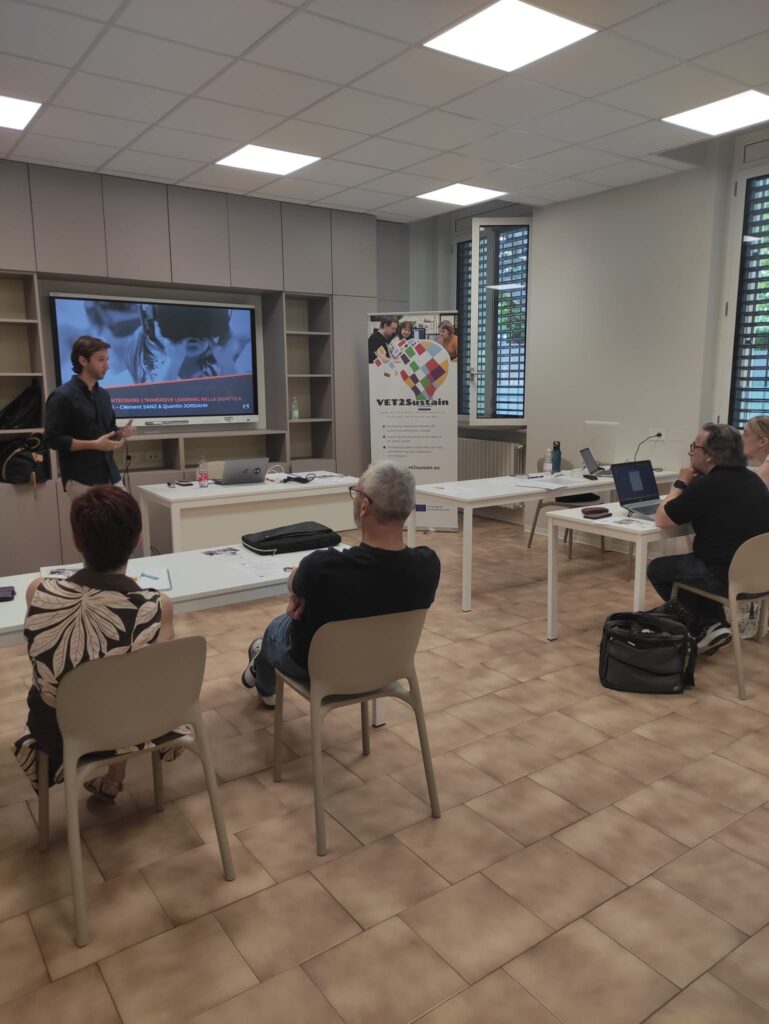
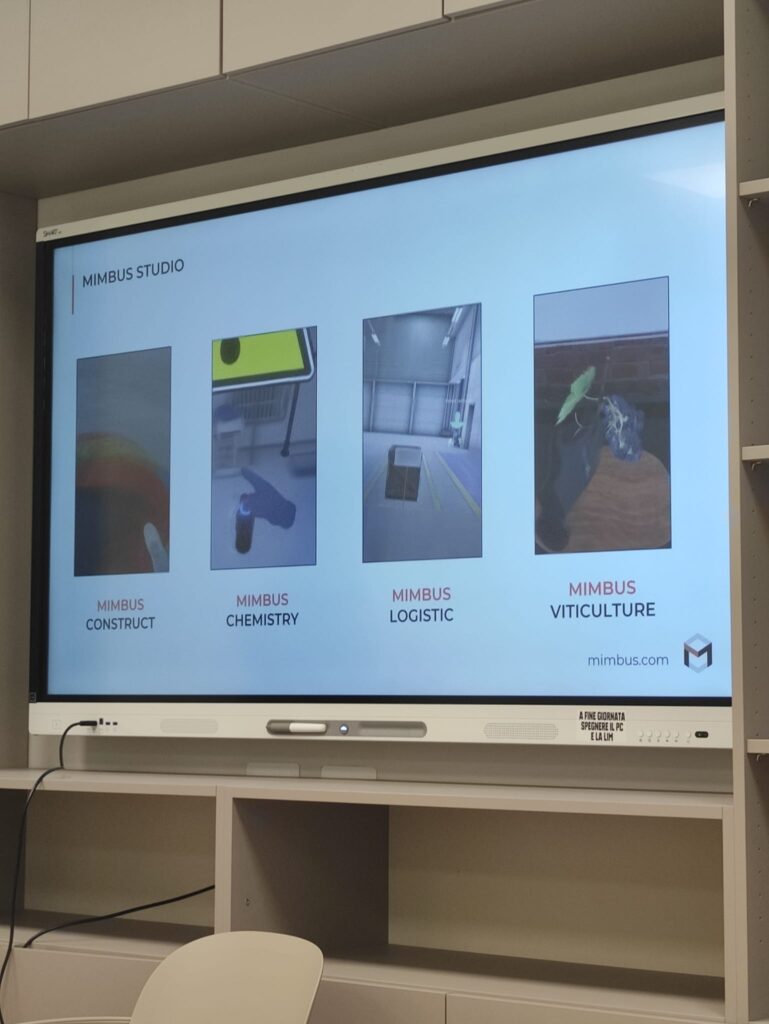
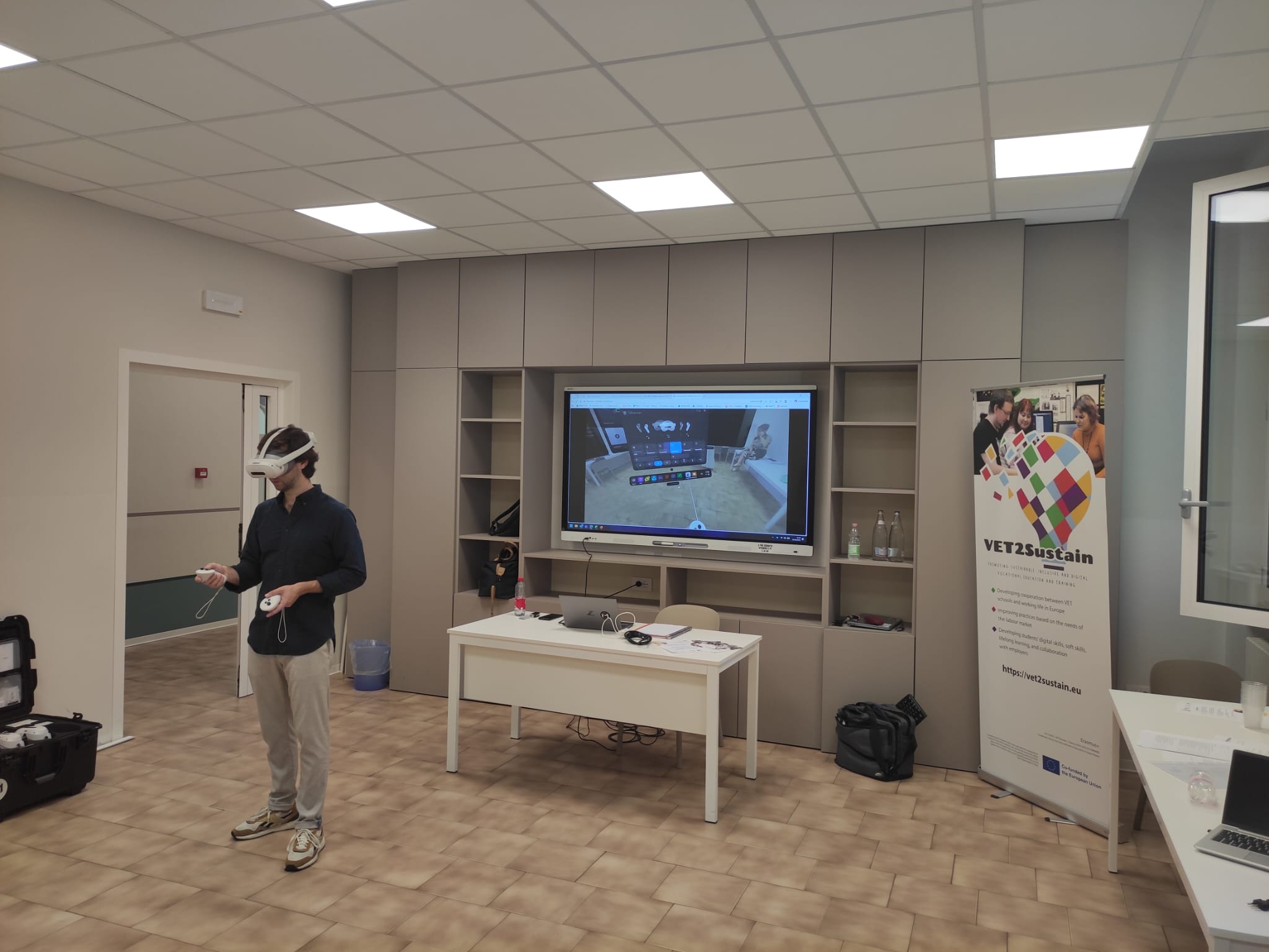
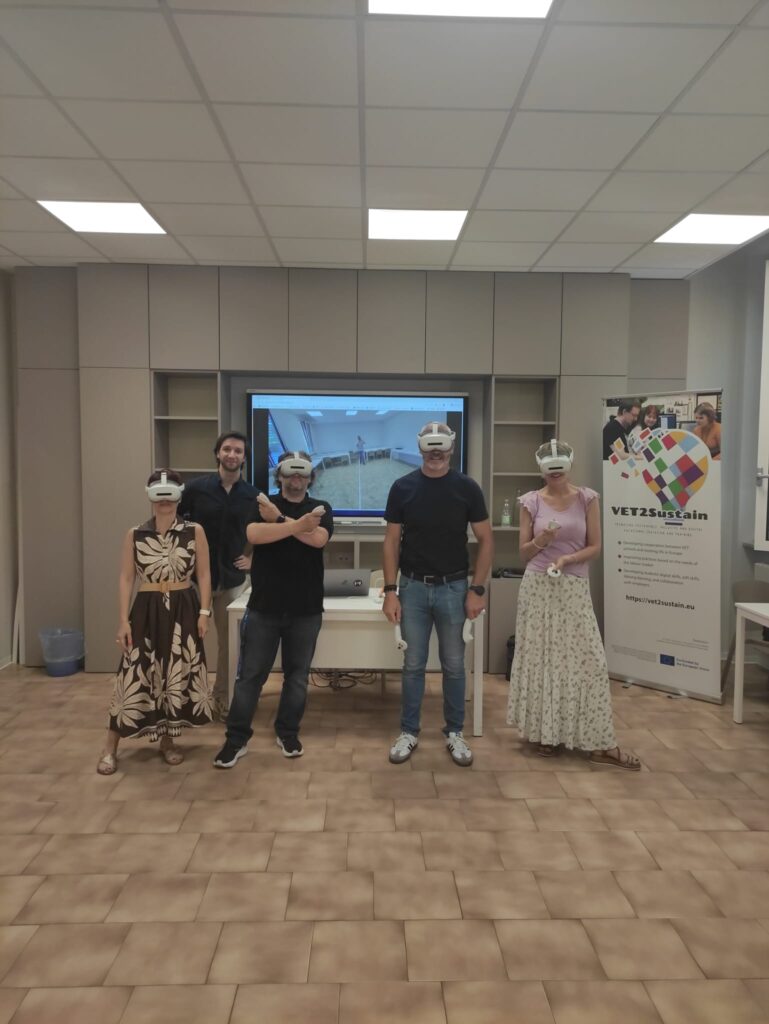
A training event hosted by Fondazione ENAC Lombardia brought together VET professionals to experience the potential of VR in teaching and learning. Participants were introduced to VR equipment and explored virtual work environments, including laboratories, construction sites and logistics facilities.
A key part of the programme focused on Mimbus Logistics, a simulation platform that allows learners to practice logistics operations in an immersive digital environment. Through collaborative activities, participants experienced first-hand how VR can support active learning, problem-solving and teamwork.
The pilot highlighted several benefits for the VET sector:
- Immersive technologies help learners and educators strengthen their digital competences while becoming familiar with tools increasingly used in modern workplaces
- Realistic simulations enable students to develop technical and transversal skills before entering the workplace, increasing confidence and job readiness
- By replicating real work scenarios, VR helps bridge the gap between education and labour market needs, fostering stronger collaboration between VET providers and businesses