Social Club Project in Foggia: Two Days of Training with Teachers and Students
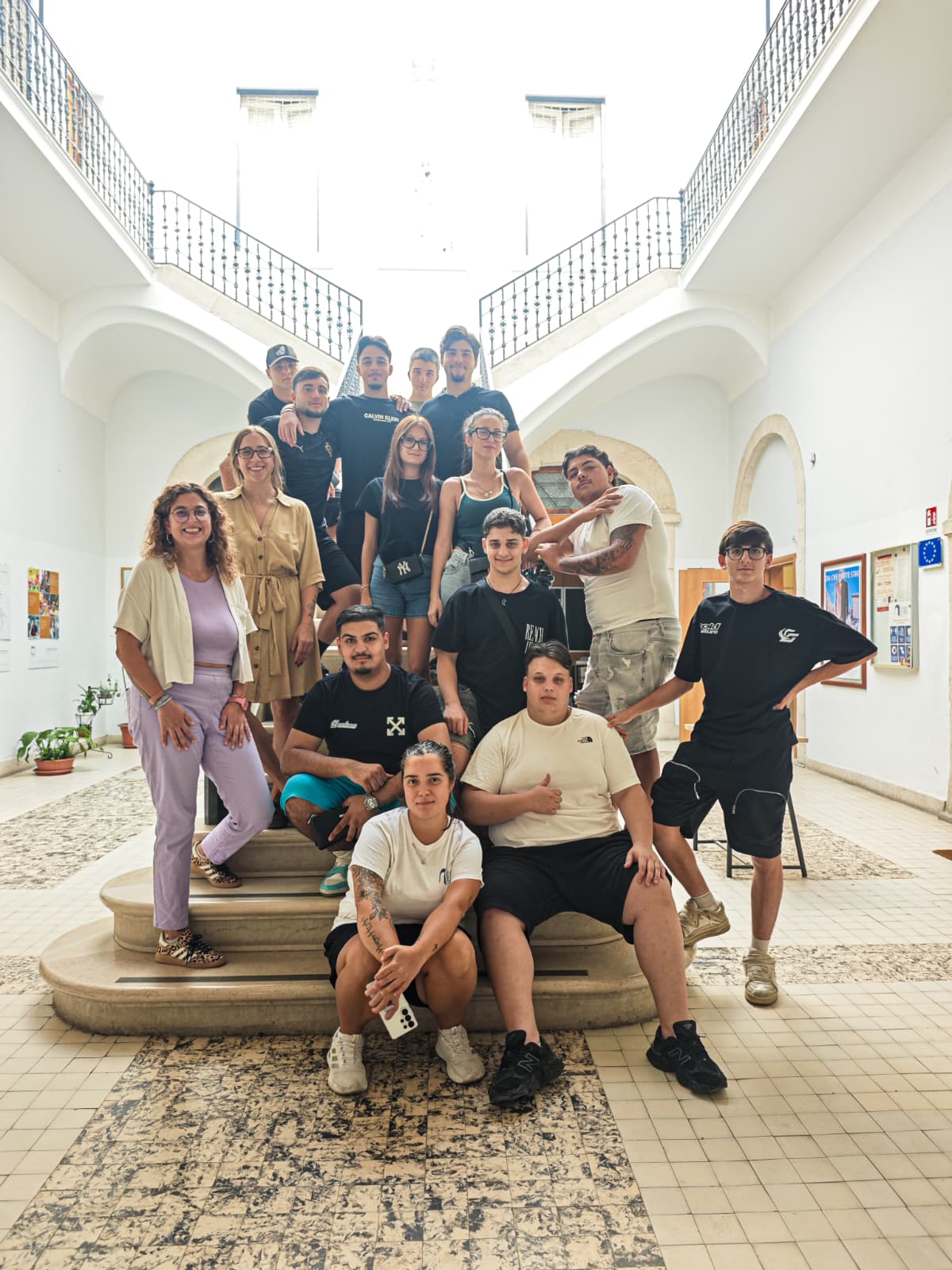
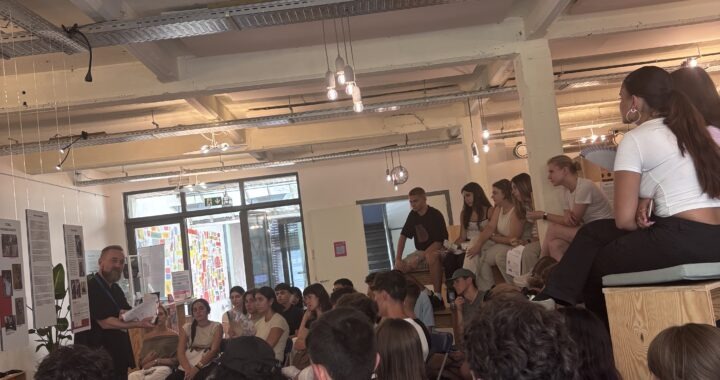
Two intense days took place at ENAC Puglia, nell’ambito del progetto europeo Erasmus+ Social Club – Promoting Social Inclusion through Culture Action (KA220-VET Cooperation Partnership, 2024-2026), the initiative bringing together five European organisations in a shared commitment to reducing cultural distance and discrimination among VET (Vocational Education and Training) students.
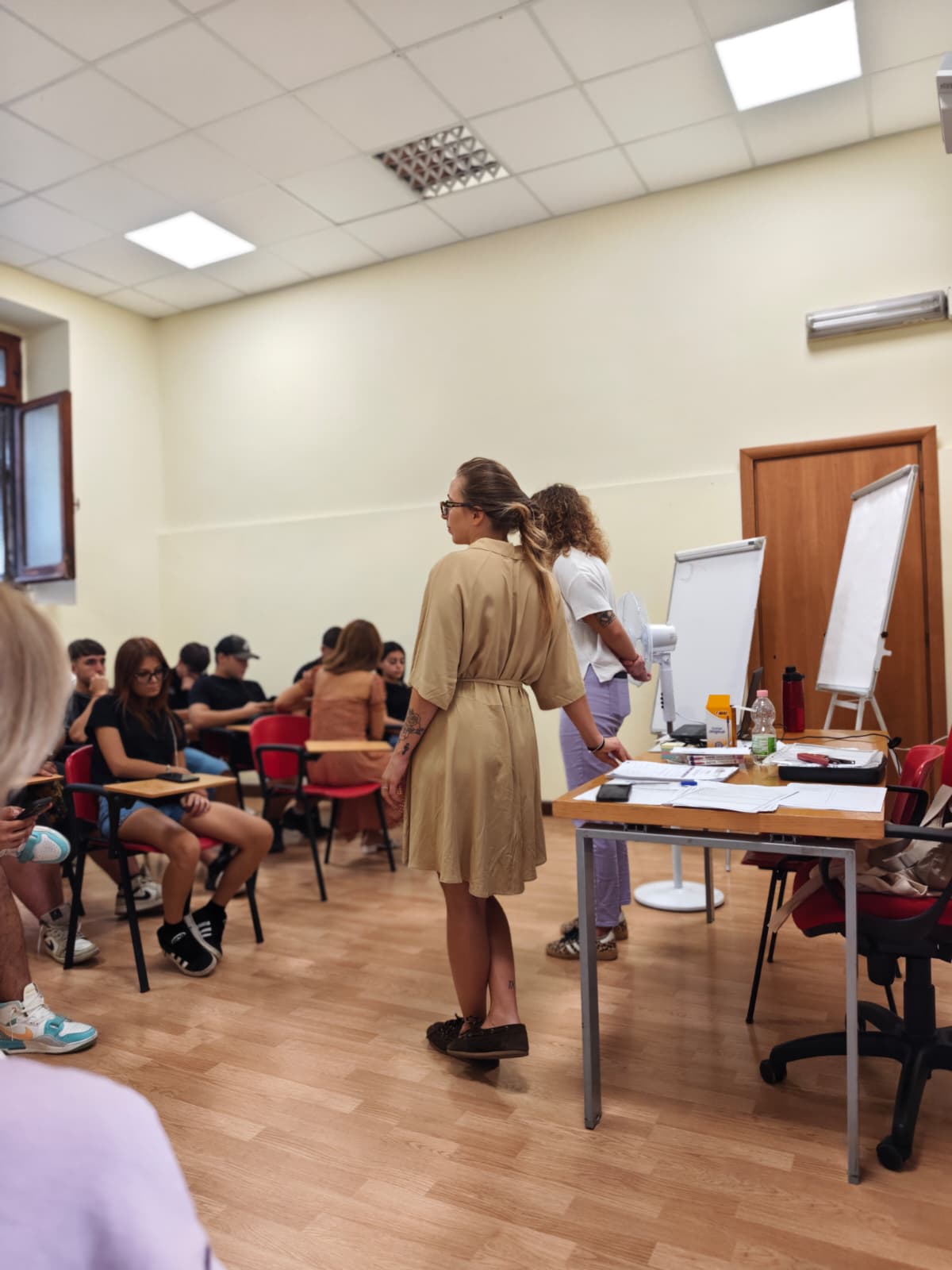
The first session, dedicated to teachers, opened the training path with an introduction to the Social Club project and its objectives. Participants took part in the first Cultural Distance Monitor survey, a tool designed to measure perceptions and attitudes towards cultural diversity, and were introduced to the Action Plan and the Bridge Lab, the teaching materials developed within the project to bring topics such as inclusion, respect for differences, and combating stereotypes into the classroom. The session closed with a self-assessment activity, helping teachers begin reflecting on their own role in fostering a more inclusive school environment.
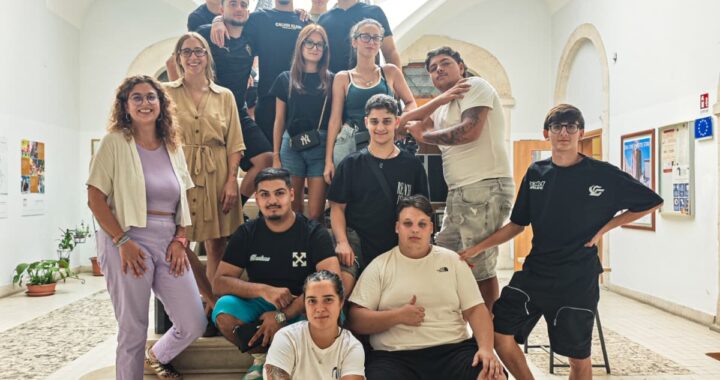
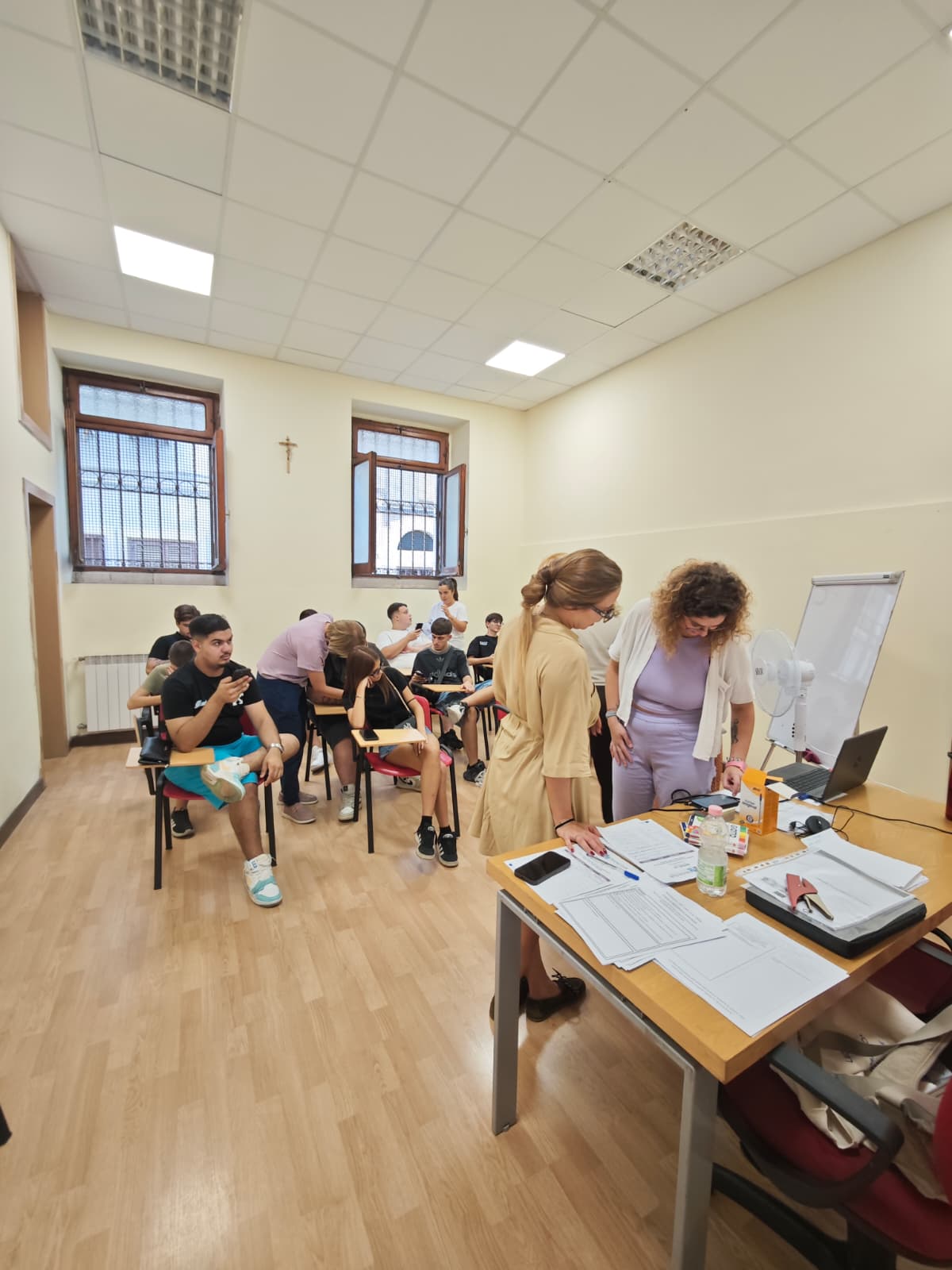
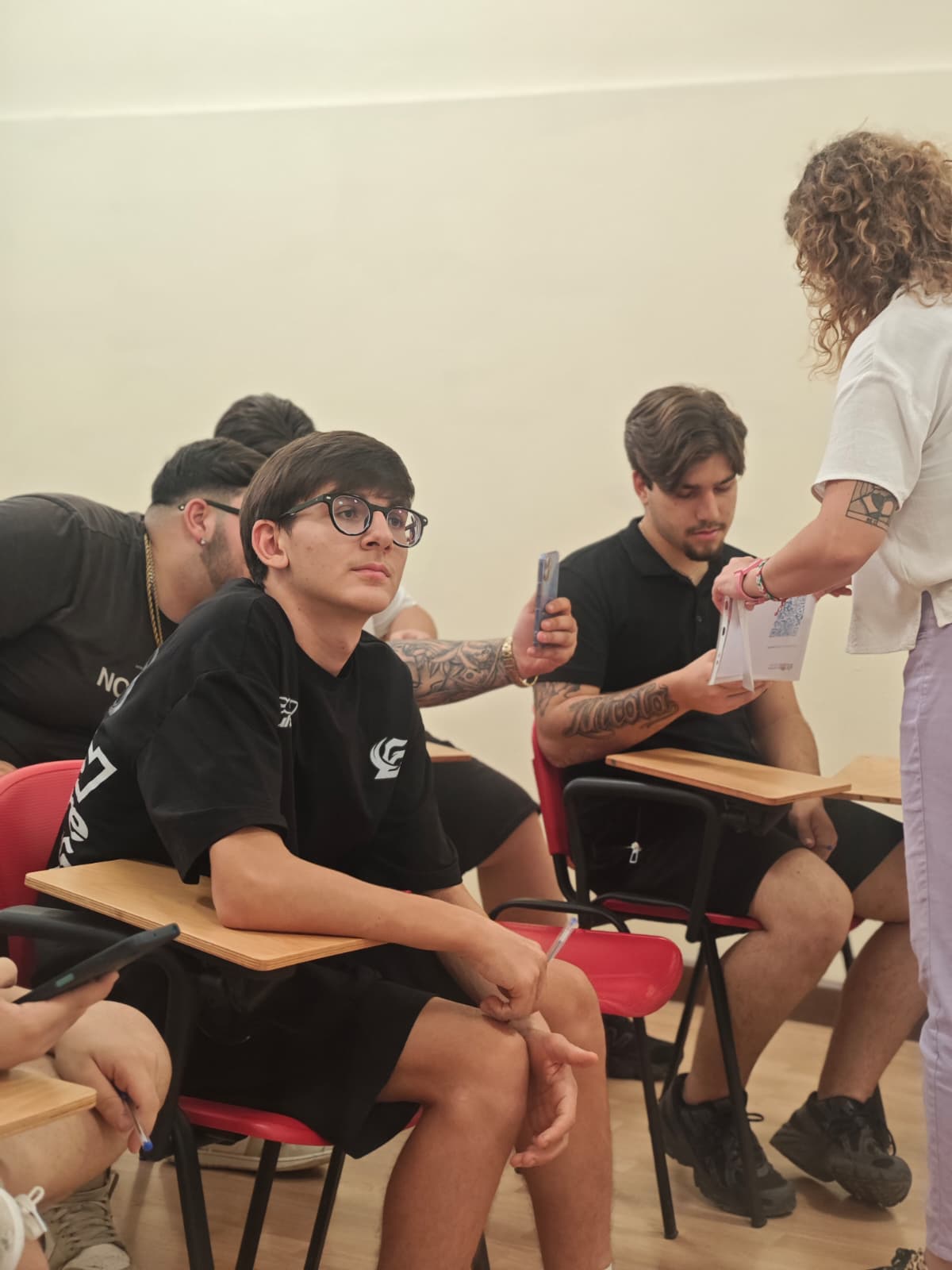
Thurdays 10th and Friday 11th september, the training opened up to students, who took centre stage in a series of hands-on activities built around the Social Club project’s modules:
Recognising different forms of discrimination — sexism, racism, ableism, heterosexism and islamophobia — through term-definition matching worksheets and real-life examples, learning to correctly name phenomena that are often invisible or normalised.
Stereotipi e pregiudizi, affrontati con un percorso di riflessione critica in piccoli gruppi, per imparare a riconoscerli nel linguaggio quotidiano e nei media.Stereotypes and prejudice, explored through critical reflection in small groups, to help students recognise them in everyday language and in the media.
An active listening exercise, designed to build empathy and strengthen peer-to-peer dialogue, in line with the project’s goal of developing students’ relational skills.
Designing the “ideal school”, imagined and drawn directly by the students, giving voice to their own vision of a more welcoming school environment.
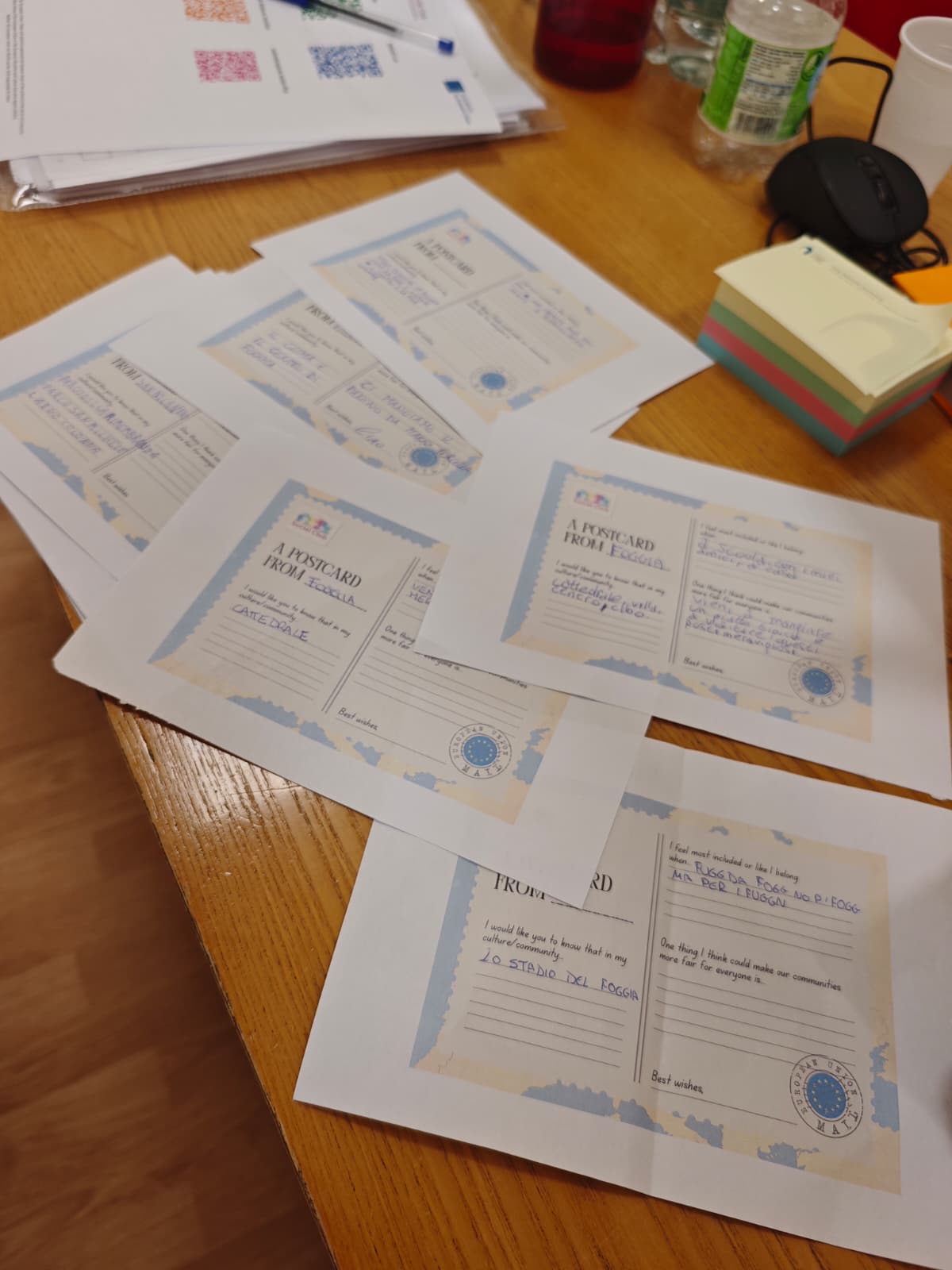
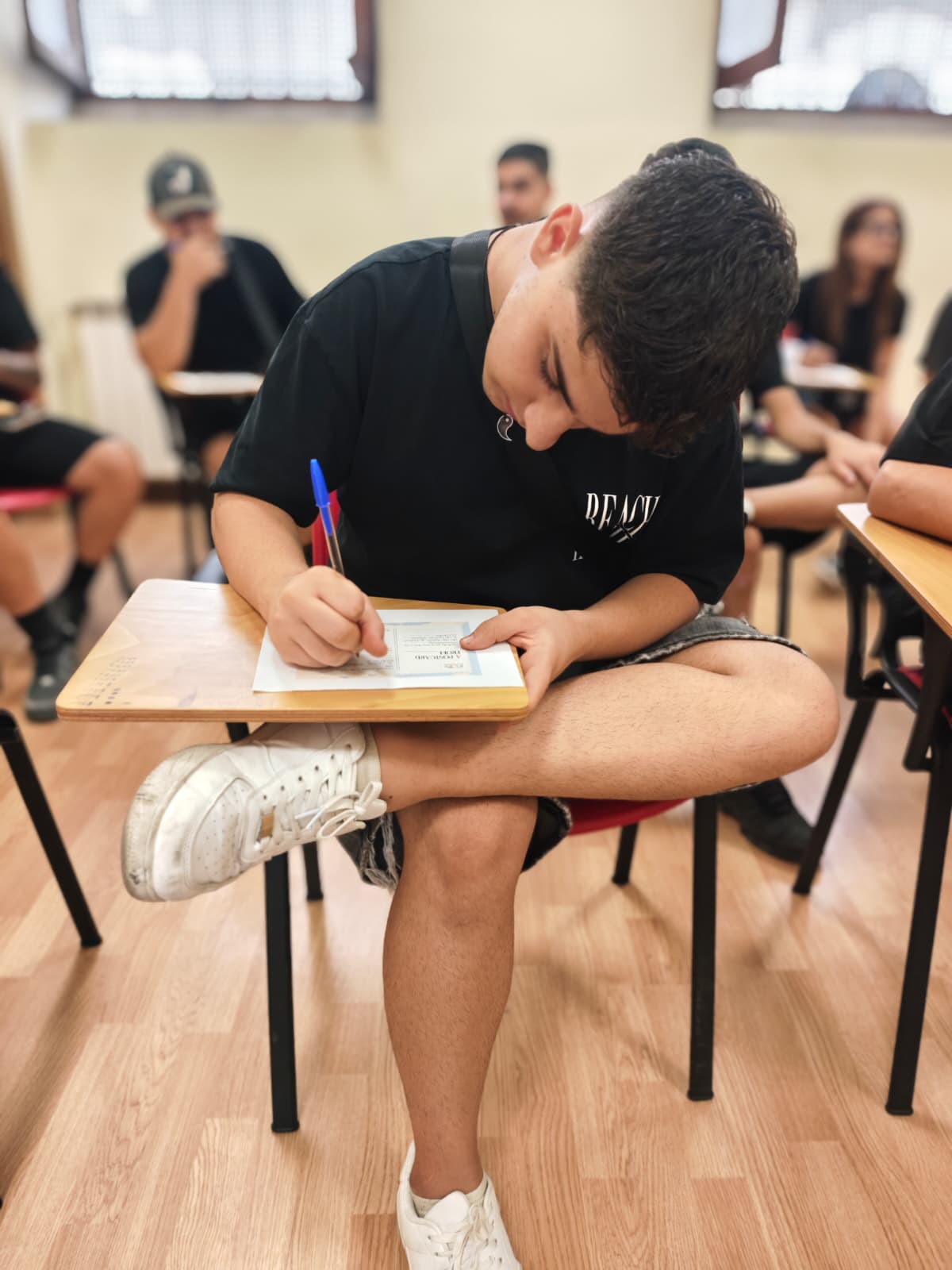
A European cultural exchange, creating virtual postcards containing a thought to share with students from other partner countries of the project.
The two days in Foggia represent one of the training milestones planned within the project, and show how joint work between teachers and students is central to the Social Club methodology: not a top-down approach, but a process built together, starting from listening to and directly involving those who experience school every day.
This year, Canossa Erasmus will once again be taking part in #ErasmusDays with a live broadcast involving Canossian schools and vocational training centres that have taken part in #Erasmus+ mobility programmes.
On Wednesday 14 October, the live broadcast – now in its fourth year – will feature students, teachers and staff sharing their first-hand experiences!
On Thursday 15 October, there will also be a second live broadcast featuring our European partners, with whom we collaborate on a daily basis to carry out our projects.
We’ll be discussing group mobility, long- and short-term mobility, work placements, job shadowing, incoming programmes, training courses and much more!
Follow us live on our YouTube channel on Wednesday 15 October and Thursday 16 October from 10 a.m. to 2 p.m.!
Four new erasmus projects approved for ENAC and the Canossian Schools
Great news for the Canossian network: four new European projects have been approved, which over the next three years will involve hundreds of students and dozens of teachers in learning paths focused on European citizenship, human rights and sustainability.
Adding to this is the confirmation of the usual KA1 mobility activity, which will bring more than 250 mobility opportunities next year. We are also awaiting the results of the KA1 mobility programme for the Canossian Institute in Rovato.
An important result, confirming the Canossian network’s ability to team up with universities, schools and institutions across Europe, and to translate international cooperation into concrete experiences for students and teachers.
Here is an overview of the approved projects.
EUchallenge – Understanding Europe to Become Its Protagonists Jean Monnet Network · ENAC partner
EUchallenge is a Jean Monnet Network bringing together six schools/VET institutions from Italy, Greece, Portugal and Romania, together with the University of Cagliari (coordinator) and ENAC as a partner. The goal is to train 250 teachers and 2,000 students on EU geopolitics, foreign policy, defence, Brexit and great-power relations.
The project relies on innovative and engaging methodologies: training modules featuring video-interviews with EU policymakers, co-teaching through COIL (Collaborative Online International Learning), Model UN-style simulations of European Parliament decisions, and participatory co-design labs. The highlight will be the two “EUchallenge JAM” mobility weeks, during which students will present their policy proposals directly in Brussels, at the EU institutions.
A project built on the experience of previous Jean Monnet Networks, aiming to respond very concretely to the problem of low civic participation and euroscepticism among young people.
H.E.R.O. – Human Rights Education for Responsible Europeans Jean Monnet Project – Canossa Campus di Brescia
The H.E.R.O. project, promoted by the Canossa Campus of Brescia, introduces a structured, vertical European learning pathway, integrated into Civic Education from the second to the fifth year of upper secondary school.
Grounded in the Charter of Fundamental Rights of the EU and the Treaty on European Union, H.E.R.O. adopts a human-rights-based approach, with human dignity and democracy as its unifying thread. Over three years it will involve approximately 430 students across 24 classes, for a total of 240 hours of structured learning, aiming to strengthen critical thinking, awareness of rights and duties, and intercultural dialogue.
The school in Rovato brings Europe into lower secondary education too. EU-GLIMPSE builds a progressive three-year pathway (grades 1–3, ages 11–14), fully integrated into Civic Education, designed for a fairly homogeneous socio-cultural context where opportunities to engage with European diversity are still limited.
Each class follows a Learning Unit dedicated to the European Union, understood not only as an institutional system but as a community built on shared values, rights and responsibilities. The project will involve around 180 students and 6 teachers, including a group of “ambassador teachers” responsible for planning and ensuring the pathway’s sustainability over time.
GreenAgro4Edu – Sustainability Enters Agricultural Training KA2 – ENAC partner
With GreenAgro4Edu the focus expands to vocational training and sustainability. The project aims to strengthen VET teachers’ ability to teach and assess agroecology using the European GreenComp framework, with a practical approach connected to labour-market needs.
Planned activities include train-the-trainer events, the co-creation of teaching materials and assessment rubrics, and two 10-day Field Labs for students, in Nordic and Mediterranean settings. The final goal is to provide partners with an open, reusable resource package, recognised by employers as evidence of sustainability competences.
Four projects, four different ways of bringing Europe to our students: from geopolitics to human rights, from middle school to vocational training. The Canossiane network keeps growing, together with Europe.
How can we talk about Europe with vocational education and training students in a way that is concrete, relevant to their experiences and genuinely engaging? This question guided the first year of the EUCLASS Alliance pilot, the Jean Monnet project coordinated by ENAC that brings together European schools and educational organisations to strengthen the European dimension of vocational education and training.
The two-year pilot began in autumn 2025. During its first year, six VET providers — ENAC in Italy, Centro San Viator in Spain, Luovi in Finland, Kuressaare Ametikool in Estonia, Firda in the Netherlands and AKMI in Greece — introduced into their classrooms the materials and methodologies developed during the first Teacher Summer School. The aim was not simply to provide information about the European Union, but to test activities capable of making often distant-seeming topics more accessible: institutions, democracy, citizenship, shared values, identity and opportunities for young people.
The project’s shared calendar records 30 activities involving almost 1,000 students.
These figures reflect the breadth and variety of the first year. The most interesting result, however, emerges from the classroom experiences: students participate more and understand better when Europe stops being an abstract subject and becomes something they can discuss, simulate, create and experience.
In many of the participating schools, one of the most successful activities was the Moving Debate. In this dynamic format, students take a position on questions such as “Do you feel like a European citizen?” or “Does Europe need to change?”, physically moving between the “I agree” and “I disagree” areas.
After explaining their initial choice and listening to their classmates’ arguments, students can reconsider their opinion and reposition themselves in the room. It is a simple yet powerful exercise that allows them to experience democratic dialogue, active listening and the possibility of changing their point of view. Simulations also played a central role. In the workshop dedicated to the Maastricht Treaty, the history of European integration became a first-hand experience. Divided into national delegations, students negotiated different interests, built alliances and sought compromises, discovering how essential mediation and listening are to democratic processes.
The 3-Euro Coin workshop, by contrast, began with an everyday object. After analysing the symbols and figures featured on real euro coins, the groups designed a new coin and justified their choices from historical, cultural and civic perspectives.
The Chocolate Directive simulation enabled students to take on the roles of the European Commission, Parliament, Council and Member States. They exchanged views and negotiated with one another to reach a common decision.
In the Mermaid Quota Simulation, the delegations had to agree on how to distribute a limited resource — mermaids — while balancing national and collective interests. In both cases, role play made complex concepts such as cooperation, European decision-making and compromise more accessible.
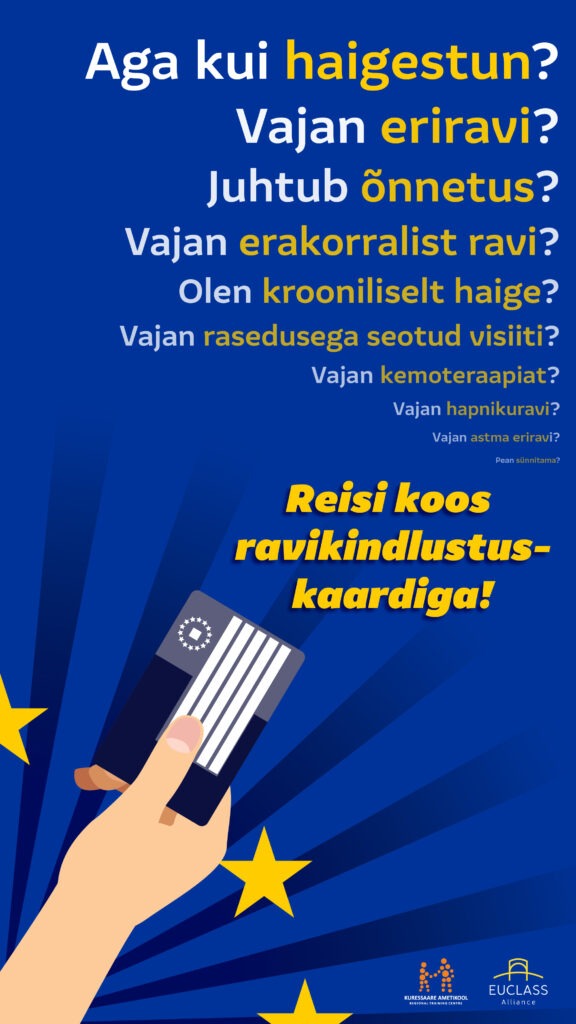
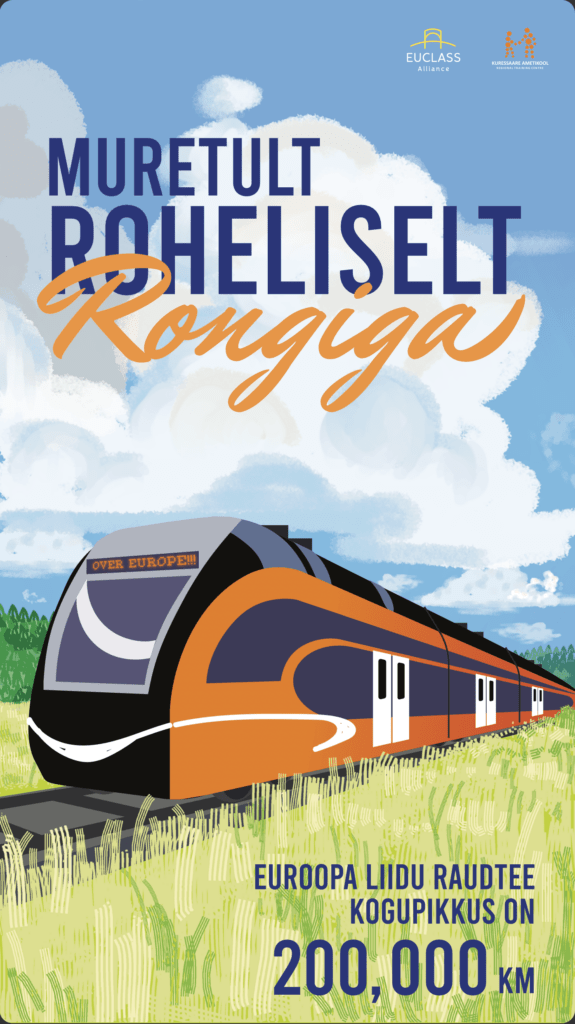
Alongside debates and simulations, the pilot also highlighted students’ creativity and vocational skills. In Estonia, graphic design students at Kuressaare Ametikool produced posters for the My Estonia, My Europe exhibition, transforming their research on the European Union into a professional visual communication project. The posters later became teaching resources for other classes and provided an opportunity for discussion during Europe Week.
In Spain, Centro San Viator turned the European institutions into a mission to be solved. In the Mission Strasbourg escape room, Basic VET students worked in teams to tackle puzzles about EU symbols, citizens’ rights, institutions and European funding. Through clues, maps and collaborative challenges, topics often perceived as remote became concrete, accessible and engaging.
The activities produced different but interconnected learning outcomes: greater knowledge of European institutions and rights, stronger awareness of the EU’s impact on everyday life, and the development of transversal competences such as communication, critical thinking, collaboration, creativity, negotiation and problem-solving.
The comparison between the different experiences also shows that the chosen approach makes a real difference. Expert contributions remain valuable because they provide authoritative knowledge, but long, predominantly lecture-based sessions risk losing students’ attention. Debates, role plays, visual materials, authentic objects and creative activities make complex concepts more accessible. They also engage students who may find traditional teaching methods more difficult.
The first year closes with a strong foundation and clear guidance for the next phase. During the second year, the schools will continue testing and refining the materials, strengthen online collaborative activities and teacher exchanges, and create further opportunities for students’ voices to be heard. The feedback collected will help make the activities more accessible, more relevant to different vocational pathways and easier to transfer to other educational contexts.
The most important lesson has already emerged: bringing young people closer to Europe requires more than explaining how its institutions work. They need opportunities to take a position, exchange views, negotiate, create and collaborate across borders. This is how Europe truly enters the classroom and European citizenship becomes a lived experience.
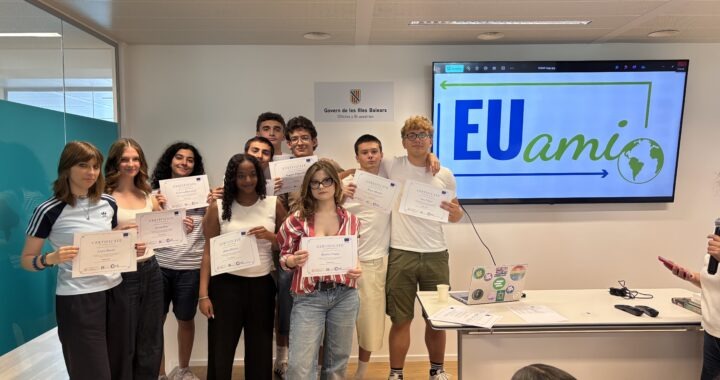
From new friendships to first-hand encounters with the European Union, the Jean Monnet European Values and Migration (EUAMI) Summer School offered participants far more than a traditional academic programme.
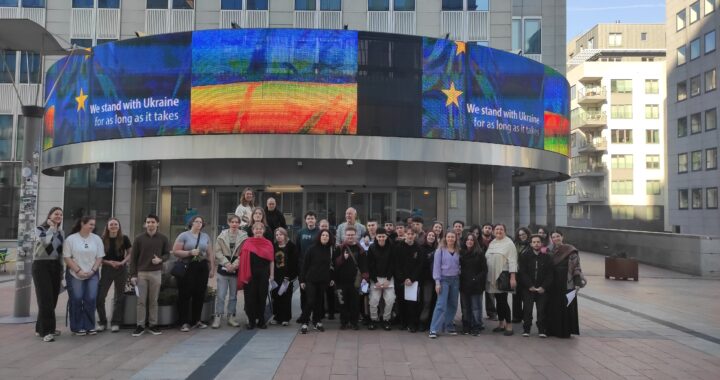
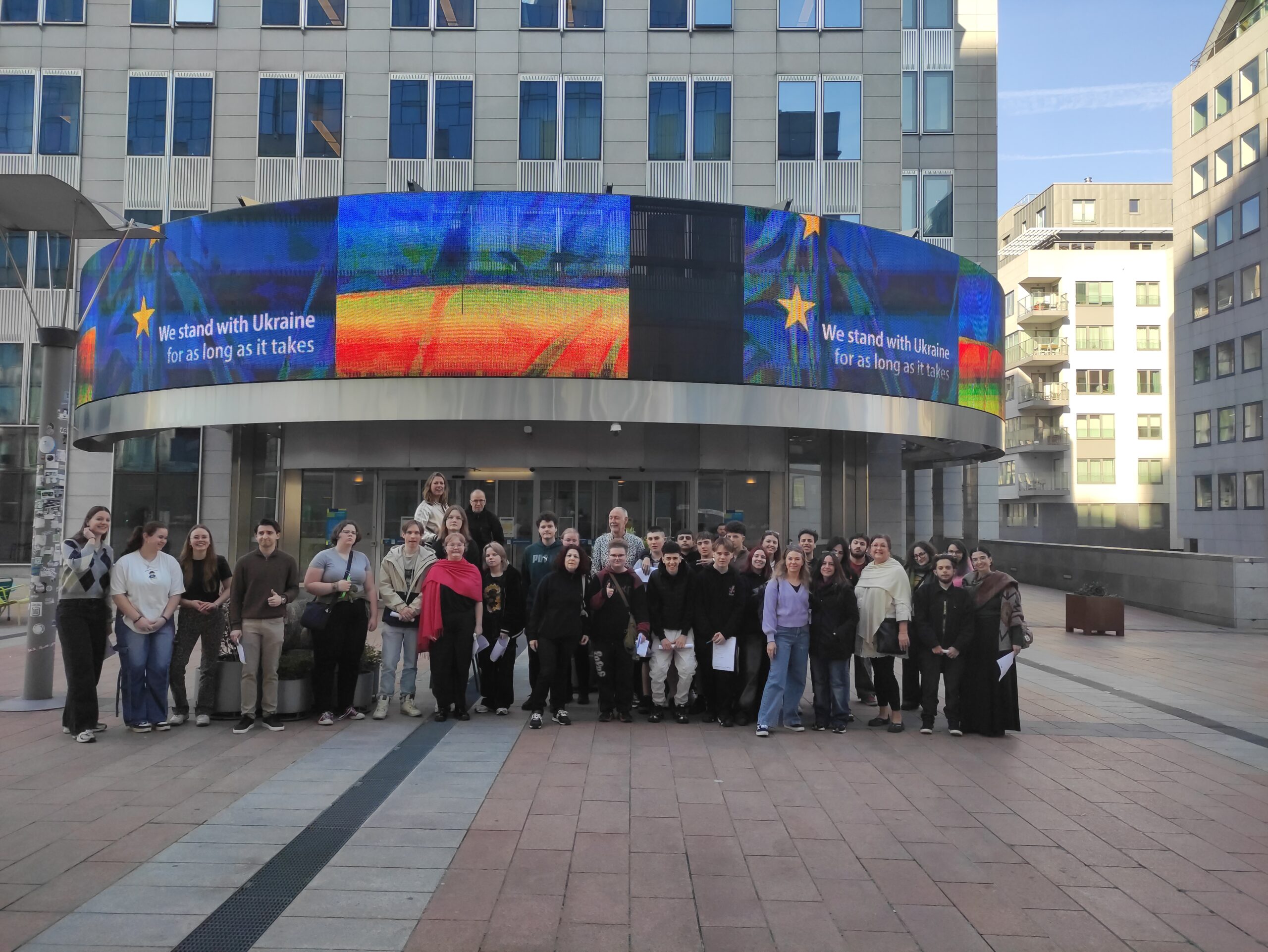
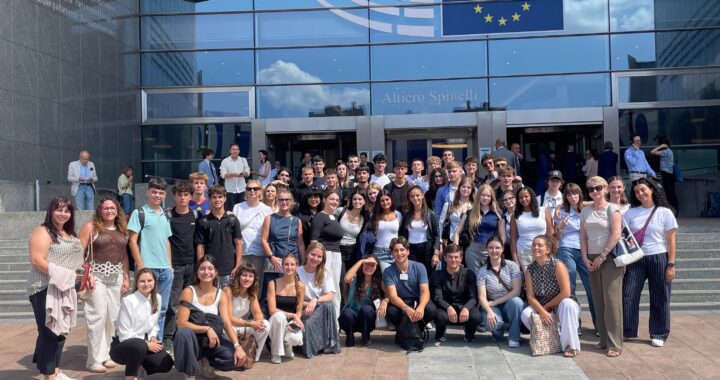
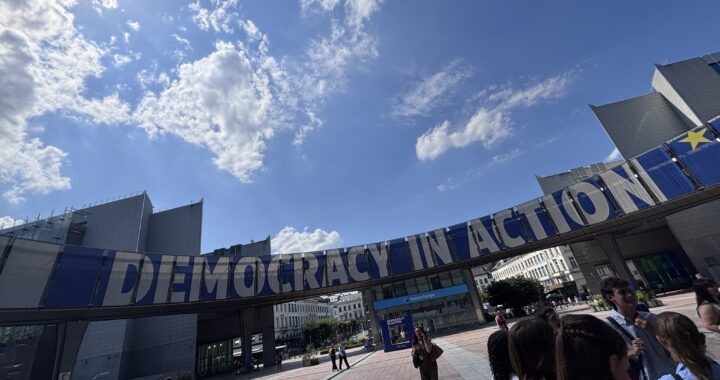
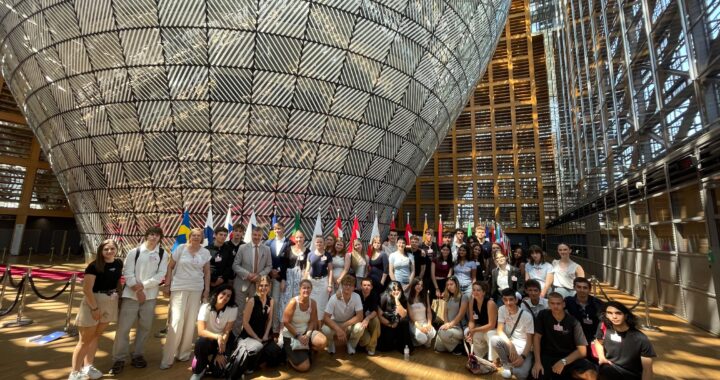
Held in Brussels from 13 to 17 July, the Summer School brought together more than forty students from four EU Member States for an intensive week of learning, discussion, and cultural exchange. Throughout the programme, participants visited the European Union’s main institutions—the European Parliament, the European Commission, and the Council of the European Union—engaged in conversations with Members of the European Parliament, explored a museum dedicated to the history of migration, and discovered the important role that Europe’s regions play through the work of the Committee of the Regions.
Yet the official programme tells only part of the story. During the week, new friendships were formed, ideas and perspectives were exchanged across cultures, and, above all, participants developed a stronger sense of belonging to a shared European community.
Each student experienced the Summer School in a unique way. This collective “travel diary” brings together their individual reflections, memories, and insights, offering a personal account of a week that was as enriching outside the classroom as it was within it.
All the contributions included in this volume were written by students who participated in the EUAMI Summer School.
Participating in the EUAMI Summer School 2026 in Brussels was an intense, educational, and inspiring learning journey that turned theoretical concepts into a vibrant, concrete experience. Returning to the classroom after these days means bringing back a whole new awareness of what the European Union truly is and how its institutions operate.
This article has been written by the students from I.S. “E.Fermi” of Mantua (Italy) who took part in the second summer school of the Jean Monnet project “European Values and Migration (EUAMI)” in Brussels from 13 to 17 July 2026. It reflects the personal opinions of the students.
The most impactful part of the entire program was undoubtedly the opportunity to step inside the very places where the future of our continent is shaped: the European Commission, the European Parliament, and the Council of the European Union. Through direct discussions with experts and political representatives – such as our meeting with Member of the European Parliament Giorgio Gori, or visiting regional representations like those of the Tuscany Region and the Balearic Islands — we came to understand how EU policies directly connect to local territories and the daily lives of citizens.
Among all the stages of the program, the experience that left the greatest mark on our journey was the visit to the Council of the European Union, and specifically the presentation by Manouela Mavroudi, Political Administrator for Research, Space, Company Law and Consumer Protection at the General Secretariat of the Council of the EU.
Dr. Mavroudi’s address was an exceptional moment of clarity and inspiration. Hearing directly from a high-level official about how complex regulations take shape — from consumer protection to space and research policies — gave us an inside look at the European legislative machine. Her presentation highlighted and conveyed the genuine value of institutional work, showing how technical rigor and political vision come together to drive innovation and safeguard the rights of over 400 million citizens.
It was a deeply valuable debate, where her openness to answering our questions made this European institution feel incredibly close, human, and accessible. In addition to the visits and lectures, a core and engaging activity was the Foreign Affairs Council simulation on the draft Returns Regulation. Stepping into the shoes of negotiators, Member State representatives (as well as human rights organizations and legal experts) helped us realize the complexity of reaching a compromise between security, national sovereignty, and respect for fundamental rights as established by the EU Charter. The activity pushed us to challenge ourselves, practice public speaking, and collaborate actively with peers from other schools and countries.
The EUAMI Summer School program far exceeded our expectations. We didn’t just return home with notions of EU law or policy; we carry with us the awareness of being active European citizens. We learned the importance of dialogue, respect for diversity, and the value of institutions that work every day to protect the founding values of the Union. This experience showed us that Europe is not just a collection of buildings in Brussels, but a living community that we, too, are part of.
Every student has an unforgettable experience during their school years. For me, that experience was the Summer School in Brussels. It was a valuable opportunity to deepen my understanding of European values, exchange ideas with students from different countries, and build lasting friendships. The programme was much more than an exchange – it was a place where we could learn, grow, and develop together.
Author: Onur Halilov, student from Emiliyan Stanev Secondary School, in Veliko Tarnovo, Bulgaria.
Throughout the Summer School, I expanded my knowledge of the European Union and its institutions. We learned about the key events that shaped the European Union, how its institutions operate, and how the legislative and voting procedures work. It was fascinating to experience the atmosphere of European politics firsthand and gain a better understanding of how decisions affecting millions of people are made.
At first, I found the simulation activities quite challenging because it was my first time participating in a programme like this. Fortunately, everything was explained clearly and we have been guided through the process. Once I understood how it worked, the simulations became both enjoyable and engaging. Working together on proposals for important policies helped me improve my teamwork, communication, and critical thinking skills.
One of the most memorable parts of the programme was visiting the European institutions. At each institution, we attended informative presentations about their work, responsibilities, and the values they promote. The highlight of the entire visit was the European Parliament. Being able to see where important decisions are discussed and made was an inspiring experience that I will always remember.
The programme exceeded my expectations in many ways. I especially appreciated the opportunity to visit the European institutions and learn directly from the people working there. Another pleasant surprise was the amount of free time we had, which allowed us to explore the beautiful city of Brussels, discover its landmarks, and enjoy its unique atmosphere.
The International lunch with participants from Poland, Spain, and Italy was another unforgettable experience. We had the chance to taste traditional dishes from different countries, learn more about each other’s cultures, and spend quality time together. I particularly enjoyed the Spanish cuisine, which was absolutely delicious.
Looking back, this programme gave me so much. I made new friends from across Europe, improved my English by communicating every day, exchanged cultural experiences, and gained valuable knowledge about the European Union and its institutions. Most importantly, it inspired me to become more open-minded, confident, and engaged as a young European citizen. I will always remember this Summer School as one of the most rewarding experiences of my school life.
Before travelling to Brussels, I knew the European Union mostly from school lessons and the news. I expected the EUAMI project to be educational, but I did not expect it to change the way I think about Europe. Looking back, it became one of the most valuable experiences I have ever had.
Author: Ivaylo Grozdanov, student from Emiliyan Stanev Secondary School, in Veliko Tarnovo, Bulgaria.
From the first day, I enjoyed meeting young people from different European countries. Everyone came with different backgrounds, ideas, and experiences, which made every conversation interesting. It was fascinating to discover how people from different cultures could have different opinions while still sharing the same values of respect and cooperation.
One of my favourite moments was visiting the European Parliament. It was exciting to stand inside a place where important decisions that affect millions of people are made. During the visit, I understood that politics is not only about laws and institutions – it is also about finding solutions that improve people’s lives. Seeing the Parliament in person made everything we had learned feel much more real.
The workshops were another highlight of the project. Instead of sitting through long presentations, we worked in teams, shared opinions, and solved different challenges together. We discussed topics such as democracy, migration, sustainability, and the future of the European Union. Listening to people with completely different perspectives helped me see issues from new angles and appreciate how valuable open discussion can be.
Of course, the project was not only about learning. We also had time to explore Brussels together. Walking through the Grand Place and spending evenings talking with new friends are memories I will always keep. Those moments outside the workshops helped us build real friendships and made the experience even more meaningful.
One of the best parts of the experience was working with people from different countries on common goals. Every activity required us to exchange ideas, cooperate, and find solutions together. It reminded me that the best results often come when people with different perspectives work as one team.
When the project came to an end, saying goodbye was much harder than I expected. It is unbelievable for me to cry about people I met just five days ago. In just a short time, we had become a close group despite living in different countries. I returned home with new friends, unforgettable memories, and a better understanding of what it means to be part of Europe.
The EUAMI project showed me that the European Union is not only about institutions or policies. It is also about people learning from one another, respecting different cultures, and working together to build a better future. I am grateful for this opportunity, and I hope to take part in similar international projects again. Without a doubt i will be telling my future kids about this experience.
When we signed up for the summer school we expected five days full of lectures, discussions and institutions. What we didn‘t expect was that our brightest memories wouldn‘t include just that.
Author: Ivayla Krasteva, student from Emiliyan Stanev Secondary School, in Veliko Tarnovo, Bulgaria.
On 12 July, our five-day journey in Brussels began. After arriving in Charleroi and travelling to Brussels, we finally reached our hotel and had our first opportunity to explore the city. That evening, we walked through the centre, discovered some of Brussels’ landmarks and met participants from Spain who were staying at the same hotel. What started as a simple first evening quickly became the beginning of many new international friendships.
The following day marked the official beginning of the summer school. We met the other participants and introduced our schools and countries. Through icebreakers and an international lunch, where every group shared traditional food from home, we had our first real opportunity to get to know one another. Bringing Bulgarian food and seeing the reactions of the other participants was one of the simplest, but most memorable, ways to share our culture.
The educational programme introduced us to the functioning of the European Union and, more importantly, allowed us to experience its institutions first-hand. During the week, we visited the European Commission, the European Parliament and the Council of the European Union. We also took part in activities organised by the Young European Federalists and visited the Migration Museum, where we explored different perspectives on migration and European society.
One of the most interesting parts of the programme was the simulation of the Foreign Affairs Council. Instead of simply learning about European decision-making, we had to take on roles ourselves, discuss different positions and work towards a common decision. The activity showed us how complicated cooperation between different countries can be, especially when everyone starts with different priorities.
However, the most valuable part of the summer school was not limited to the official programme.
Spending five days together meant meeting people from different countries, exchanging ideas, discovering cultural differences and finding unexpected similarities. Conversations continued long after the activities had ended, and the international groups gradually became one community.
Looking back, the summer school was much more than a series of lectures and visits. Brussels became a place where we could learn about Europe while experiencing its diversity ourselves. We returned home with new knowledge, new friendships and, most importantly, a much more personal understanding of what European cooperation can mean.
Have you ever wanted to take part in EUAMI? From 13 to 17 July, 2026, a group of students from Italy, Spain, Poland and Bulgaria took part in the EUAMI project in Brussels. In this week, they visited several important European institutions and learned how major decisions are taken for improving and protecting the founding values of the EU and its community.
Author: Viktor Baldzhiev, student from Emiliyan Stanev Secondary School, in Veliko Tarnovo, Bulgaria.
As a Bulgarian participant in this international project, I had incredible opportunities to meet with amazing people of my age, with who we shared common interests at the week we spent together. In addition to this we were tasked in teams of five to create a foreign affairs’ simulative meeting, as we represented several countries in the process.
Firstly, at the European Commission, our group discovered how European laws and policies are proposed. The Commission works to protect the interests of the EU and cooperates with member states on issues such as migration, the environment, and economic growth. This visit showed us how different institutions join forces to respond to shared challenges.
In addition to this the visit to the European Parliament gave me a clear vision of democratic-decision making process. I realized how MEPs work together to discuss and adopt laws, which are to be beneficial for everyone. Seeing the Parliament in person reminded me the importance of dialogue and cooperation when solving problems affects hundreds of millions.
One of the most impressive places we visited was the Migration Museum. There our group went through the history of migration in Europe, and Brussels particularly, and the reasons why people are leaving their home countries. The exhibitions displayed personal stories and explained how nowadays European cultural diversity was formed over the centuries.
Apart from that the Council of the European Union is the place where we saw another part of the decision-making process – reaching consensus among the twenty-seven governments. The heads of states meet there to discuss and agree on common policies. I was impressed by the importance of compromises and teamwork in reaching decisions that will reshape Europe.
If you ask me, the whole group was very excited to visit the heart of Europe and I strongly believe that we all returned with more developed point of view about the political appearance of the EU. The experience gave us all an easier approach in topics such as migration, European values, and international cooperation through real examples rather than textbooks.
In my view the EUAMI project was unforgettable and unique experience that inspired me a lot. Each location we visited increased my knowledge and explained me how the EU works for a better future. I brought back from Brussels a deeper understanding of European values, sharpened communication skills, and with greater interst in active citizenship.