At its annual conference, EfVET – the European network for vocational education and training, of which ENAC has been a member since 2018 – offers its members the opportunity to disseminate the results of their projects in order to promote best practices.
During the Roundtables, partners from various European projects have the opportunity to provide more in-depth information to all interested parties and discuss future opportunities for cooperation. During this event, ENAC and the Catholic University will present the main results of the project, specifically:
the first Intellectual Output, which consists of a report on UTCs (University Technical Colleges) and how to transfer the model to other contexts
the second Intellectual Output – Methodological framework and common tools for the development of a new curriculum
To participate, send an email to enac@enac.org indicating:
email address to which the link to participate should be sent
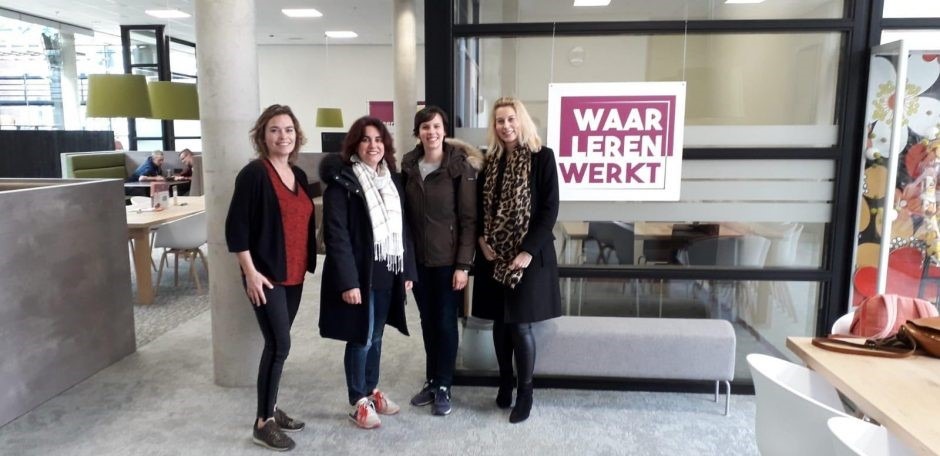
We asked some trainers who participated in Erasmus+ mobility projects last year to evaluate the impact that this experience has had on their training activities over time. Below is the testimony of Vera Bottazzi, language trainer at ENAC Lombardia – C.F.P. Canossa in Bagnolo Mella, who visited Friesland College in the Netherlands last year.
“During the three days of visits as part of the J2E project promoted by ENAC, I noticed that the training structure in the Netherlands is very different from ours. There are more unstructured activities, which I hope will also come to Italy, as I believe they are good for both professional skills and soft skills. In fact, it was the focus on the latter that struck me most during the study visit.
What have I learnt and what do I use? Definitely explaining the objective!
Each lesson, each period is dedicated to a concept, an activity that is always visible (on the blackboard, on the interactive whiteboard), which helps students understand the reason behind the exercises. In addition, the experience has helped me rethink teaching spaces. In a classroom in Bagnolo (first pastry shop), we created a different classroom setting:
The desks are arranged in groups of four, which greatly helps both students who are struggling and those who are more skilled, as they can help others.
The teacher’s desk is not near the blackboard but on the other side of the room, which helps the teacher to avoid “sitting down”. They have to get up to stand in the middle of the room (which attracts more attention) and to write on the blackboard. This situation met with a lot of resistance, but gradually seems to have been accepted.
The presentation of group work or various individual tasks takes place in the centre of the classroom. I have set up a lectern so that students can overcome their shyness and clearly share what they are doing with others. It wasn’t easy, but now the students have no problem with it.
Going beyond simple lectures…
In the fourth year classes, I gave them independent assignments to be completed over time, which they could then discuss in class (as I had seen during lessons at the Dutch school). This gave each student greater autonomy and responsibility. Of course, some took advantage of this to do less than was asked of them, but I think this is normal; the habit of lecture-style teaching does not help students to work towards results.
My confidence in the students’ soft skills has increased. I believe that in the past I sometimes took their place, but the Dutch experience made me realise that giving them more autonomy, listening to their opinions on the progress of the course and reviewing the situation as a group every month helps them to be more responsible towards their studies.
I hope that soft skills and professional skills will be considered complementary. In the future world of work, there should be no division between what you do and how you do it. I believe this will be the rule for success, and the same should apply to vocational training centres.”
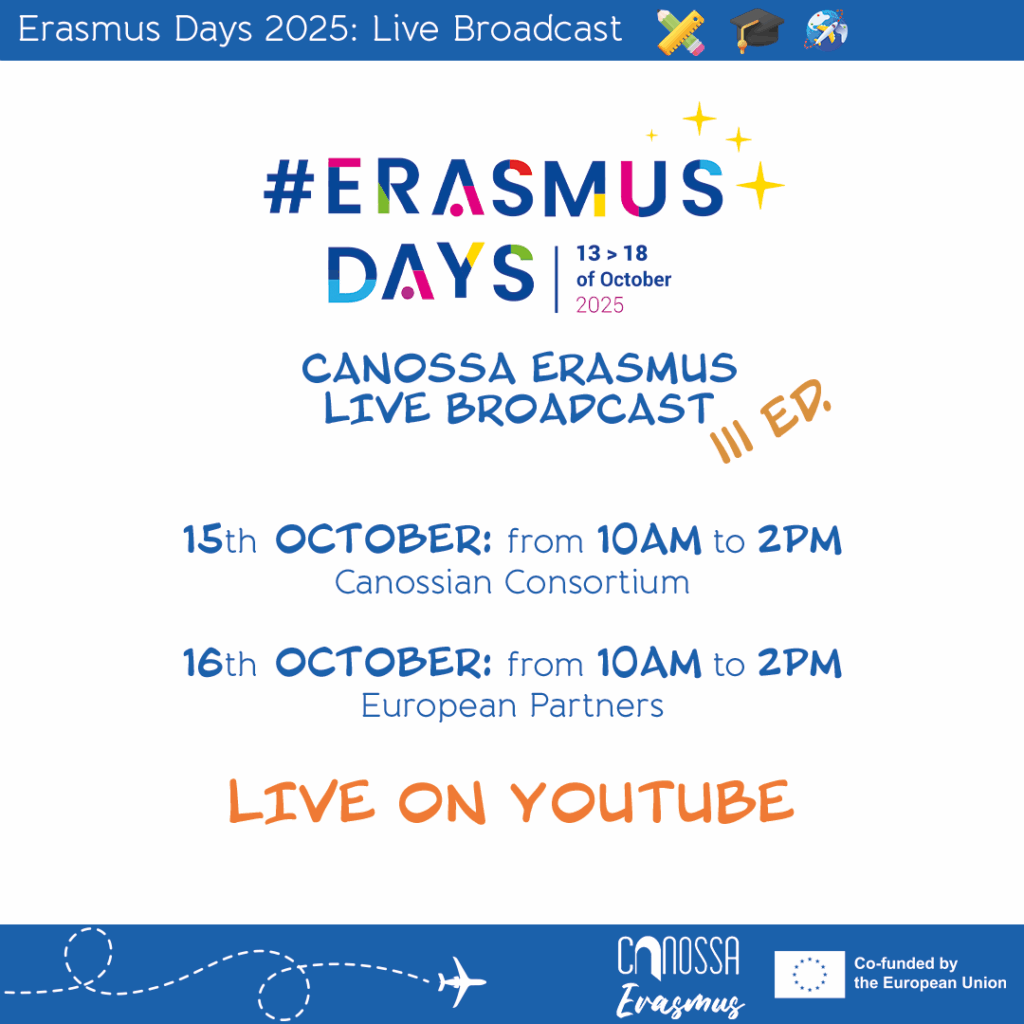
Again this year, Canossa Erasmus will participate in #Erasmusdays with a live marathon involving Canossian schools and vocational training centres that have taken part in #Erasmus+ mobility programmes. Students, teachers and staff will tell us about their experiences!
There will also be a second live broadcast with our European partners, with whom we collaborate every day to carry out our projects.
We will talk about group mobility, long and short mobility, internships, job shadowing, incoming activities, training courses and much more.
Follow us live on our YouTube channel on Wednesday 15 October and Thursday 16 October from 10th a.m. to 2th p.m.!
The EUAMI project workshop: One Africa – many Africas by Anna Pozzi
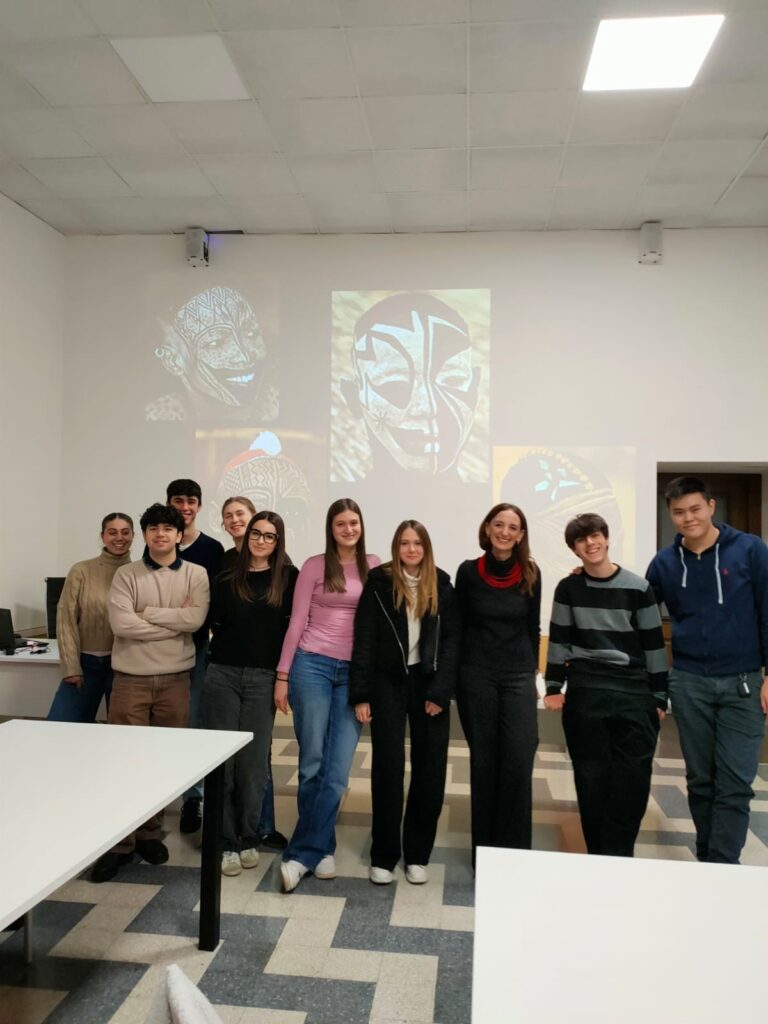
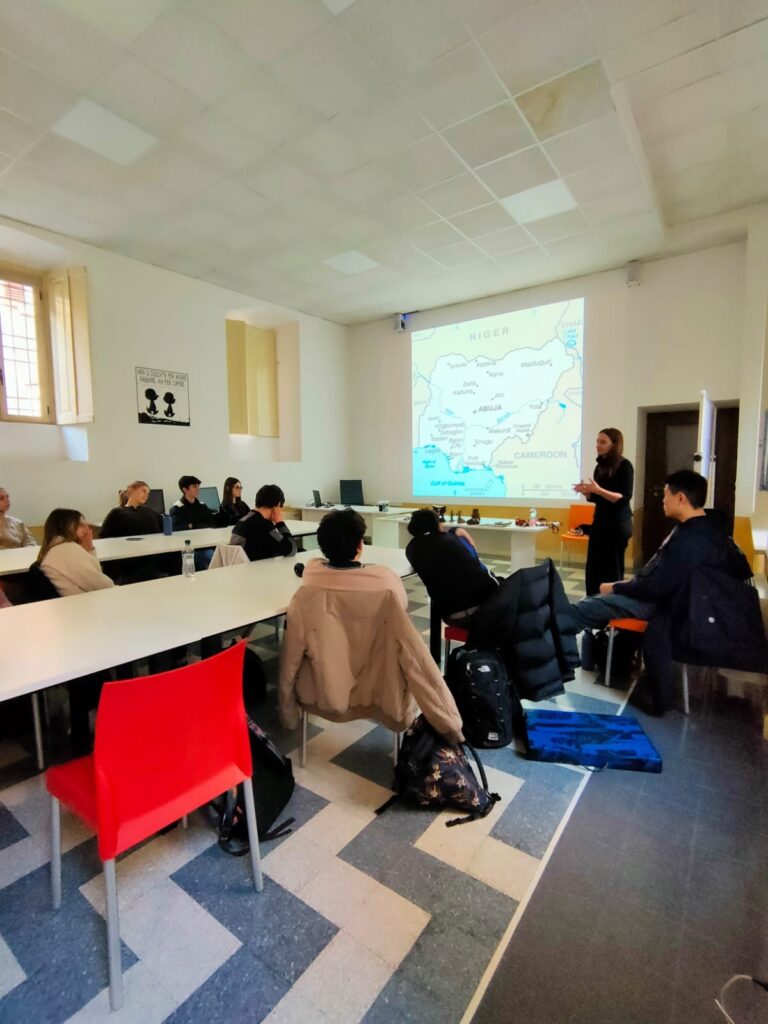
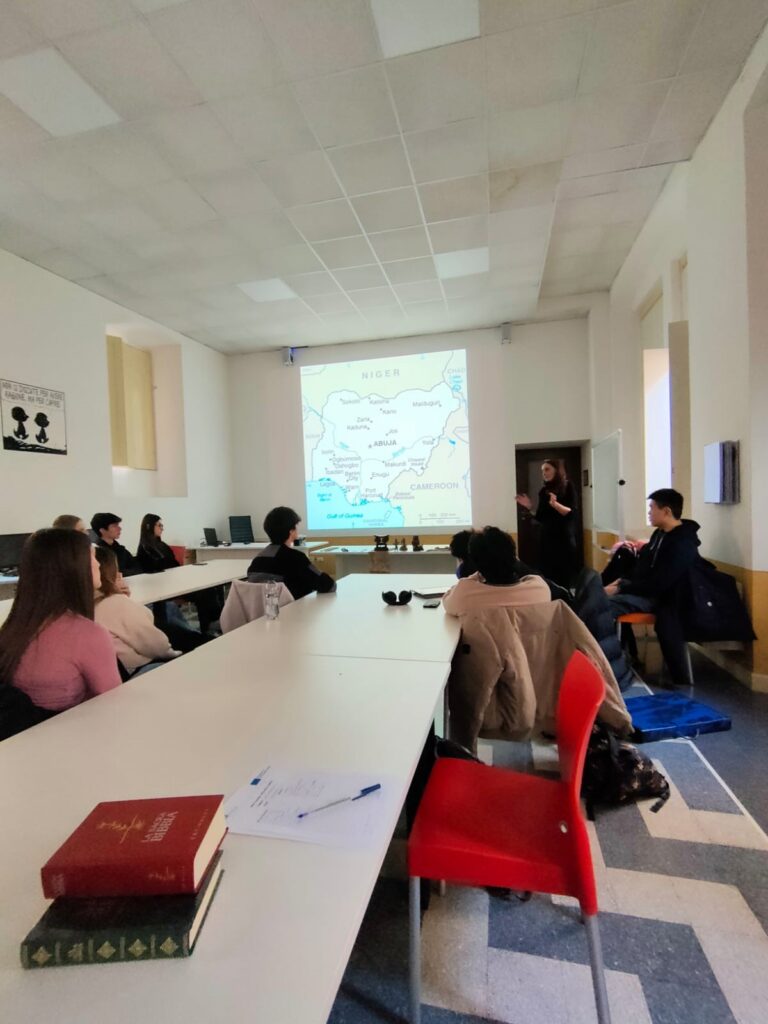
Anna Pozzi, is a journalist and writer specialising in Africa. She is editor of the monthly magazine «Mondo e missione» and contributes to various publications, for which she has produced numerous reports from countries in Africa and the Middle East. She was invited by Canossa Campus to hold a new workshop as part of the European EUAMI project. This gave Canossa Campus students the opportunity to learn more about the African continent and make new discoveries.
The meeting was a journey through the complexity of Africa, a continent often reduced to stereotypes, but which reveals extraordinary cultural, geographical and demographic diversity. Anna Pozzi emphasised how the borders drawn by Europeans during colonialism have contributed to generating long-lasting conflicts, such as the one in Sudan. She went on to compare African population growth with that of India and China and demonstrated the need for a careful reading of the dynamics that shape the continent’s future.
The journalist also focused on North Africa, highlighting the challenges posed by conflict, terrorism and climate change, which have forced millions of people to migrate. She then analysed Africa’s rapid urbanisation: more than half of the population now lives in cities, where the pandemic has exacerbated social inequalities.
A significant example was that of the Kivu region, rich in minerals but devastated by instability and exploitation. He recounted the story of Denis Mukwege (Nobel Peace Prize winner) founder of the hospital Panzi Hospital and Foundation a Bukavu, capital of the province of South Kivu, in the Democratic Republic of Congo, for women victims of violence, linking local difficulties to the consumption choices of Western countries.
The journalist also cited Nigeria, Africa’s most populous country, as an example of extreme contrasts: wealth and poverty, tradition and modernity. She concluded her remarks with an invitation to consider the impact of European policies and consumption on African humanitarian crises.
Anna Pozzi’s speech left a deep impression, stimulating greater awareness of a continent that is often misunderstood and of the responsibility to look at Africa with new eyes.
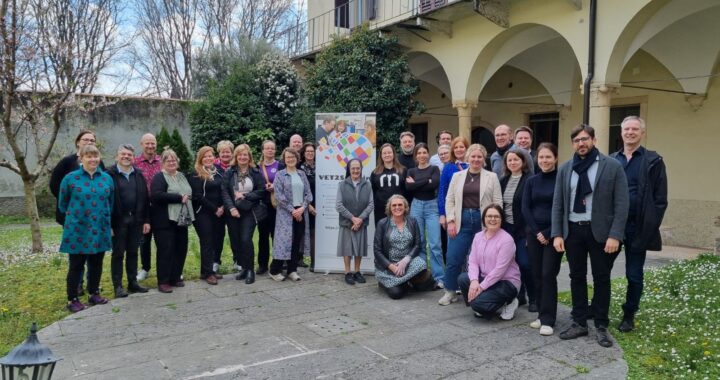
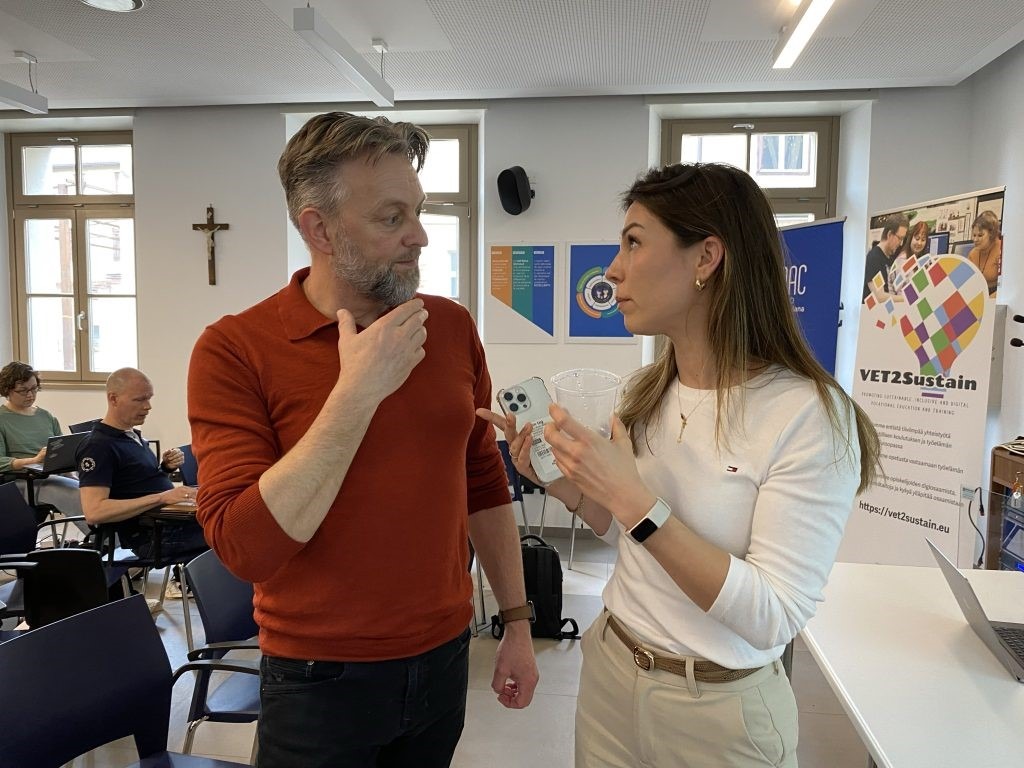
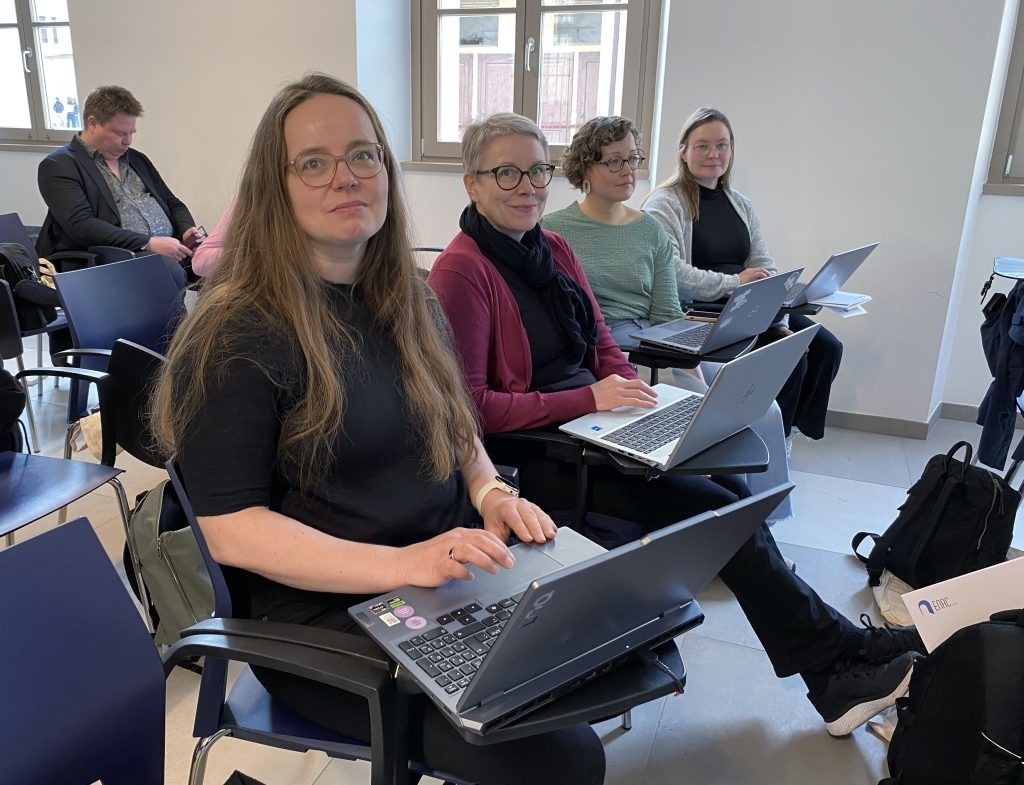
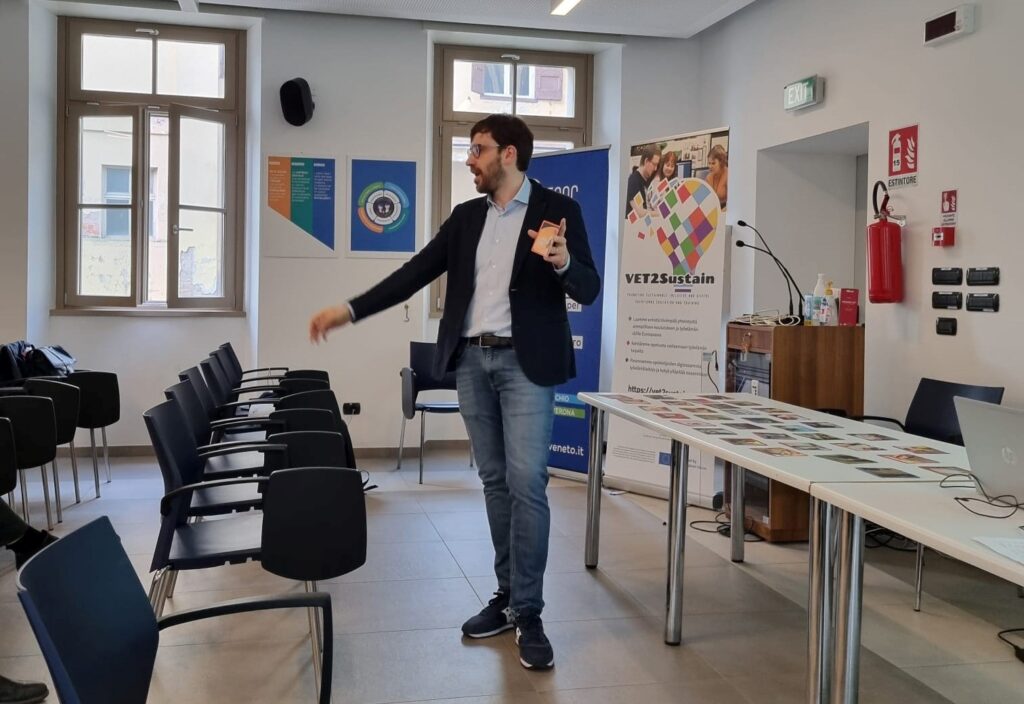
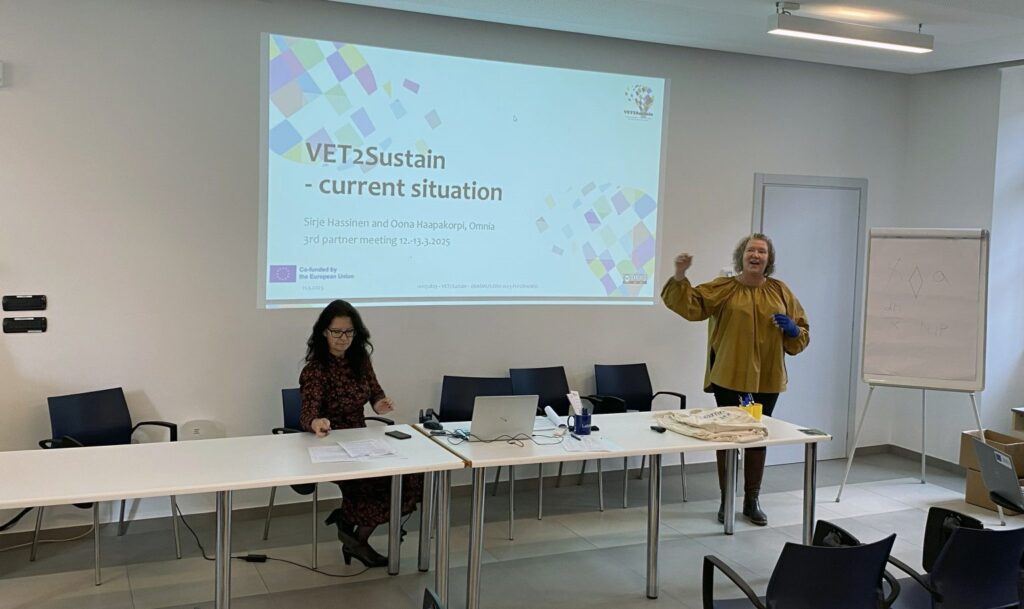
The VET2Sustain project team met in Verona on 12–13 March 2025 for a productive and collaborative meeting, working efficiently towards the project’s objectives.
The first working session was led by Sirje Hassinen and Oona Haapakorpi from Omnia, who provided an overview of the current status of the project. They reviewed the project objectives and commitments outlined in the project application. To align everyone’s understanding, they also introduced the working methods, key actions and target groups.
Later, Katarina Sandbacka presented the development of a long-term strategic action plan focused on promoting sustainable, inclusive and digital vocational education and training (VET). The main outcomes of the plan include establishing a partnership agreement for future cooperation, creating a shared strategy and action plan for the network, and organising a recurring annual event. In addition, short- and long-term action plans will be developed for VET organisations at regional, national and EU level, ensuring a well-coordinated and forward-looking approach across Europe. Virpi Kaasinen then provided an update on efforts to create and strengthen cooperation models for vocational education and training in Europe, with a particular focus on exploring networking opportunities. Key actions under development include the creation of an online platform for collaboration, participation in joint annual events for projects funded under the same theme, and the promotion of opportunities for internationalisation activities at national level.
During the meeting, the calendar of upcoming activities was shared, and discussions were held on how to organise joint meetings with national government and qualification awarding bodies and review the current progress report. A feedback session allowed participants to discuss the report, provide input and suggest improvements. The session also focused on assessing the next steps. The team also worked on collecting examples of how AI and XR technologies are currently being used in vocational education at partner institutions.
At the start of the second day of the meeting, there was a presentation on the use of Thinglink in education. Samiedu showed examples of how Thinglink can be used. Henri Pennanen from ThingLink guided all participants in the meeting through the use of the platform’s tools.
Finally, Wednesday’s communication and dissemination session focused on guiding partners in reporting on their communication and dissemination activities. Mira Torvinen-Määttä clarified the distinction between these two concepts, explaining that communication involves spreading awareness of the project, while dissemination ensures that the right people receive and use the results.
This meeting laid a solid foundation for the next steps of the project, strengthening collaboration and shared commitment to achieving its ambitious goals.
SocialClub aims to reduce cultural distance and discrimination among vocational education and training students by promoting multiculturalism, inclusion, and European belonging. It seeks to equip vocational training institutions with tools to promote cultural awareness and social inclusion through education, training, and peer learning activities.
Updates
Goals
Assessing knowledge: Measuring VET students’ understanding of cultural differences and their role in combating discrimination.
Provide training: Develop educational tools and action plans to teach students about cultural diversity.
Encourage inclusion: Promote a more inclusive system of education and training that values multiculturalism.
Building a multicultural community: Strengthening links between students and VET institutions across the EU.
Facilitating peer learning: Enabling students to learn from each other through cultural exchanges and interactive activities.
Partners
Project Infos
Codice del progetto: 2024-1-CY01-KA220-VET-000245348 Programma: Erasmus+ Key Action: Cooperation partnerships in vocational education and training Durata: 2 anni (31/12/2024 – 30/12/2026) Project Card
The European Commission’s support for this project does not constitute an endorsement of the content of this website, which reflects solely the views of the authors, and the Commission cannot be held responsible for any use that may be made of the information contained therein.
Teaching methodology on human resource management for current and future catering staff
Project
The aim of the project is to improve the human resource management skills of students and graduates of vocational schools who are training to become chefs. Through innovative methods and study programs, including digital ones, access to modern knowledge will be increased for students and graduates, as well as for professional instructors, teachers, and trainers in the culinary profession. This will improve the digital skills of students and teachers. This will result in a better match between education The project will result in a culturally harmonized European curriculum on human resource management for chefs, including intercultural skills, also aimed at Ukrainian citizens. A methodology and curriculum will be developed, as well as training programs for students in the form of educational pills and webinars. A methodological guide will be prepared for instructors, teachers, and trainers. Tools for the validation of skills in this field will be developed for all.
Activities
The project activities should lead to the development and implementation of a curriculum and teaching methods on human resource management in catering for the cooking profession in the project partner countries. The partners’ experts will develop teaching methodologies with training programs and lesson plans in short teaching formats. Multipliers will be trained to test the new project products. After their development, dissemination activities will ensure their implementation.
The European Commission’s support for this project does not constitute an endorsement of the content of this website, which reflects solely the views of the authors, and the Commission cannot be held responsible for any use that may be made of the information contained therein.
VET Schools Doing Green is a European project that aims to contribute to a more sustainable and environmentally conscious future through education and practical projects. It raises awareness among teachers about the Sustainable Development Goals (SDGs) and empowers students by encouraging them to develop their own projects and initiatives in line with the SDGs. By integrating sustainable practices and values into vocational education, the project seeks to promote a sense of responsibility and environmental awareness among students and staff.
Goals
Encourage VET staff to devote explicit time to promoting sustainable and environmental skills, attitudes, and values in VET curricula.
Include SDG (Sustainable Development Goal) themes in curricula through active teaching (with students as protagonists) and cross-curricular content (interdisciplinary knowledge to enable students to connect knowledge across different disciplines).
Include sustainability and “green” skills in assessment.
Activities
Raise staff awareness by organizing four Staff Weeks, which will be organized in pairs, with each pair comprising one country from Southern Europe and one from Northern Europe. The first week of each pair will be dedicated to learning and training, and the second to practice: staff members, with the help of experts, will create “green tasks” for students. Raise awareness among students through a five-month trial period followed by a Students Week. Students will be involved in their own CFP in the development of various activities and projects, sometimes involving companies and even the local community.
Partners
Project Info
Project Code: 2023-1-N LO 1-KA22O-VET-OOO I 54743 Programme: Erasmus+ Key Action: Cooperation partnerships in vocational education and training Duration: 2 years e 3 months (01/10/2023 – 31/12/2025) Project Card
The European Commission’s support for this project does not constitute an endorsement of the content of this website, which reflects solely the views of the authors, and the Commission cannot be held responsible for any use that may be made of the information contained therein.
EUAMI is a project based on a network of six partners in the field of education and training. Specifically, it involves an Italian university (University of Padua – Department of Political Science) and five high schools from Bulgaria (Emilian Stanev SU), Italy (Istituto E. Fermi and Canossa Campus), Poland (Zespół Szkół Administracyjno-Ekonomicznych), and Spain (Sant Josep Obrer). ENAC is a partner and supports Canossa Campus in carrying out specific tasks/activities within the project.
The students, teachers, and trainers therefore come from different backgrounds and have different levels of knowledge and experience of the European Union, thus creating a multicultural and multilingual working environment.
The project has a duration of 3 years (36 months) and is therefore an opportunity for teachers to engage in curricular and extracurricular activities that allow for the expansion of the European dimension in teaching. More specifically, the project seeks to improve teachers’ understanding of key European Union issues such as its history and the functioning of its institutions, with a particular focus on the issue of migration flows. Migration flows and human rights are in fact the two key issues around which the various activities of the project are structured. The entire project will be implemented in English.
Goal
Provide training courses for teachers to learn better and more up-to-date methods for teaching the European dimension at school;
Contribute to the professional development of the teachers involved;
Make recommendations for effectively incorporating the EU and related topics into school curricula;
Ensure that students have a better understanding of key EU issues and are able to understand how the EU works;
Increase the sense of belonging to the EU among teachers and students.
Activities
The project involves training activities conducted by university professors to equip teachers with the skills and methodologies needed to educate students about Europe and teacha them about the EU, and to introduce these topics into high school curricula. The project involves teachers and students, offering opportunities for mobility and collaborative teaching/mentoring experiences.
I partner
Project’s Info
Project Code: 101127284 Programme: Erasmus+ Key Action: Jean Monnet Activities Action Type: : Jean Monnet Policy Debates – Thematic Networks in Higher Education Duration: 3 years (01-12-2023 – 30-11-2026)
The European Commission’s support for this project does not constitute an endorsement of the content of this website, which reflects solely the views of the authors, and the Commission cannot be held responsible for any use that may be made of the information contained therein.
The education systems of many countries need to be radically overhauled in order to remain competitive. Innovative approaches are needed to combat early school leaving (ESL) and the failure of young people to acquire key skills. The UK’s UTC model seems capable of responding to these new challenges. It is a group of vocational schools that are implementing a pedagogical approach strongly focused on student activities, based on the Project Based Learning model. Each UTC, in collaboration with a local university and businesses, works to develop a curriculum that allows students to have experiences similar to those they would have after school, also integrating three types of learning: technical academic practical All aspects of life at these colleges are built around a specific methodology called PiXL Edge, a model that allows students to develop skills that will be useful for the rest of their lives and for their future professional activities (Leadership, Organization, Communication, Initiative, and Resilience).
Goals
The project aims to further strengthen the key and technical-professional skills of young people attending VET courses by analyzing and adapting the English UTC model to the Italian, Spanish, and German contexts.
In this way, the project aims to respond to a common need of European VET systems:
to increase the levels of key skills among young people and consequently reduce the skills gap;
to promote new partnerships and organizational models for WBL approaches.
Activities and methodologies
There will be four phases during the project, each involving the creation of specific outputs:
Developing a model for transferring the English UTC model;
Transferring the model and adapting it to VET centers in other countries by designing training courses (curricula) for each sector and professional field, combining national standards with innovative elements from English schools;
Testing and implementing this model, i.e., validating and adopting the UTC model in selected VET centers in Italy, Spain, and Germany;
The European Commission’s support for this project does not constitute an endorsement of the content of this website, which reflects solely the views of the authors, and the Commission cannot be held responsible for any use that may be made of the information contained therein.